Understanding Incontinence: The 5 Types, Their Causes, and What Helps

Types of Incontinence: Key Takeaways
-
Incontinence is a symptom with several possible causes; it comes in five main types, each with its own fix
-
Most types of incontinence can improve with pelvic floor exercises, bladder training, or simple lifestyle changes
-
The right protection depends on the type of incontinence and the level of absorbency you need
-
If you notice new or sudden leakage, consider a visit to your doctor
You reach the front door with the groceries, key already in your hand, and suddenly there's a small leak you didn't expect.
You freeze for a second, caught somewhere between surprise and worry, wondering if something is wrong.
Later, once things have settled, you find yourself reaching for your phone to look up what just happened.
In this guide, we'll walk you through the five types of incontinence, what can cause each of them, when it's worth seeing a doctor, and how to find comfortable, discreet protection that fits your day.
Incontinence Explained
Incontinence is the involuntary loss of bladder or bowel control.
For some people, that means a few drops when they cough or laugh. For others, it's a sudden urge that's hard to hold or need to go to the bathroom more often than before.
The amount and the timing vary from person to person, and so does the cause behind it.
Incontinence is not an illness by itself. It signals that something in your body needs attention.
The condition is far more common than you may think: it affects 100 million people in the United States, and it happens more often the older we get.
Urinary vs. Bowel Incontinence
Urinary incontinence is the leaking of urine, often caused by changes in bladder health that come with age, pregnancy, or menopause.
Bowel incontinence, sometimes called fecal incontinence, involves loss of control over the bowels, usually linked to muscle or nerve changes.
The two can happen on their own or together.
The 5 Types of Urinary Incontinence
There are five main types of incontinence. Many people recognize themselves in just one; others find their symptoms match two types of incontinence at once.
The simplest way to tell where you fit is to notice what happens right before a leak.
Stress Incontinence
Stress incontinence is triggered when there’s a sudden pressure on the bladder.
It can happen when you cough, sneeze, laugh, or lift something heavy.
Stress incontinence is the most common type in younger and middle-aged women, and it usually traces back to a weakened pelvic floor after pregnancy, childbirth, or menopause.
The leaks are typically small, but they can occur at any time during the day.
The best place to start is with pelvic floor exercises, also known as Kegels, which strengthen the muscles that hold urine in place.
For everyday reassurance, light to moderate bladder control pads tuck discreetly into your underwear, making you feel comfortable and confident.
Urge Incontinence (Overactive Bladder)
Urge incontinence is that sudden, intense need to go that arrives with little warning and won’t wait, sometimes bringing a leak before you reach the bathroom or at the sound of running water.
It's a sign of an overactive bladder, where the muscles contract when they shouldn't.
A good place to start is bladder training and timed bathroom visits, which gently teach the bladder to wait a little longer between trips.
For steady protection during your day, consider protective underwear; it looks and feels much like regular underwear and keeps you dry and comfortable.
Overflow Incontinence
Overflow incontinence brings a frequent dribble because the bladder never empties fully.
It's more common in men, where it can happen due to an enlarged prostate or after surgery. It can also affect women, as well as anyone with nerve damage from conditions like diabetes or multiple sclerosis.
The signs to notice are a weak stream and the sense that you're never quite finished.
Because the cause sits with a bladder that can't empty fully, it’s worth talking to your doctor, who can recommend how to treat the blockage or nerve issue behind it.
For everyday protection, guards or briefs may be a good fit.
Functional Incontinence
Functional incontinence works differently from the other types of urinary incontinence. The bladder is doing its job, but something outside it gets in the way.
This can be arthritis, limited mobility, or a condition like dementia that makes it hard to reach the bathroom or recognize the urge in time.
Functional incontinence often affects older adults. It can also be challenging for the family members and caregivers who look after them.
The things that help most are practical and easy to fix: small changes around the house and a regular toileting routine.
For daily care, consider easy-change briefs that make things simpler and more comfortable, both for the person and the one helping them.
Mixed Incontinence
Mixed incontinence is when two types of incontinence happen together. Most often, these are stress and urge at the same time.
It's very common, especially in women over 50.
It helps to match the absorbency to your heaviest days, so you're covered for any situation the day brings.
The usual approach is to treat the type that troubles you most first, then turn to the other once the first one eases.
What Causes Bladder and Bowel Leakage
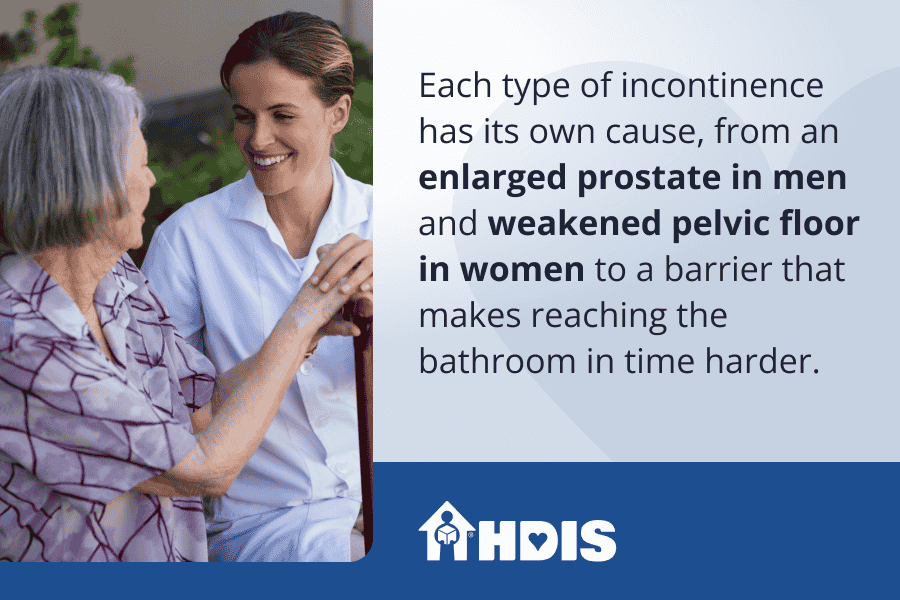
The causes of incontinence are different for everyone. Knowing what triggers yours helps you and your doctor pick an effective treatment.
Here are some of the most common causes, and you may recognize more than one:
-
Pelvic floor weakening after pregnancy, childbirth, or menopause
-
Prostate enlargement or prostate surgery in men
-
Nerve damage caused by diabetes, Parkinson's, multiple sclerosis, stroke
-
Lifestyle factors: caffeine, alcohol, excess weight, constipation
Temporary vs. Ongoing Causes
Ongoing incontinence usually comes on slowly and doesn't go away on its own. It’s better to have it checked rather than wait.
When To See a Doctor
Leaks may be common, but they're not something you simply have to live with.
It's worth talking to your doctor if you spot the following:
-
Leakage that's new, sudden, or getting worse
-
Blood in your urine
-
Pain or burning when you go
-
Leakage that affects your work, sleep, or social life
-
Trouble emptying your bladder
-
A persistently weak stream
What To Expect at the Appointment
Your doctor will ask about your daily routine and the things that worry you.
They may suggest running a simple urine test or keeping a short bladder diary.
Jotting down when the leaks happen and what you were doing at the time can make that first conversation much easier.
How To Choose the Right Protection
The right protection really comes down to two things: the kind of incontinence you have and how much coverage you need.
Age and gender matter far less than most people assume. Here's how we help our customers find the right fit.
Find the Right Absorbency Level
For light, occasional leaks, a bladder control pad or liner is usually all you need.
For moderate, regular leaks, protective underwear is a good fit: it looks and feels like real underwear and pulls on the same way.
For heavy leakage or overnight protection, check out tab-style briefs.
Fit and Skin Health Come First
When a product leaks, the reason is typically the wrong size.
Trapped moisture is the most common cause of adult diaper rash, so it’s recommended to change protection on a regular schedule.

Why Customers Choose HDIS for a Reliable Incontinence Protection
For more than 40 years, HDIS has cared about one thing: getting the right incontinence products to people's doors, discreetly and reliably.
That dedication is why families come back to us year after year.
- Four decades specializing only in incontinence, not a general drugstore
- Free samples so you can test fit and absorbency before buying
- Discreet, unmarked home delivery on a schedule you control
- A care team that helps match products to your specific leakage type
FAQs About Types of Urinary Incontinence
What is incontinence?
Incontinence is a loss of bladder or bowel control that happens without warning. It's usually a symptom of something treatable, from a weakened pelvic floor to an overactive bladder.
What are the 5 types of incontinence?
These include stress, urge, overflow, functional, and mixed incontinence. Stress leaks with pressure like a cough; urge is accompanied by sudden urgency; overflow leaves you with the feeling your bladder won't empty; functional includes a mobility or cognition barrier, and mixed incontinence combines two types together.
What is the most common type of incontinence?
Each of the five urinary types of incontinence has different causes and treatments. For example, stress incontinence can happen after pregnancy and when your body is preparing for menopause. Urge incontinence is tied to overactive bladder. Many people over 50 have mixed incontinence.
What is the difference between urge and stress incontinence?
Stress incontinence happens due to physical pressure like coughing, sneezing, or lifting something heavy. Urge incontinence is a sudden, intense need to urinate that you can't resist. Stress incontinence comes from a weakened pelvic floor, while urge incontinence comes from an overactive bladder muscle.
Is incontinence a normal part of aging?
Incontinence becomes more common with age, but it doesn’t mean leaving it to shape your day. Explore pelvic floor exercises, bladder training, and simple lifestyle changes that can help relieve and control this condition.